
Feature shortlist
5 Best Lead Enrichment Tools (2026)
Compare waterfall coverage, verified contact data, APIs, credit economics, and workflow depth for enrichment operations.
Shortlist size
5
Publicly evidenced options with current billing notes and real website captures.
Quick verdict
Clay is the flexible workflow builder, FullEnrich is the focused waterfall, and LeadMagic is the granular technical data layer. Prospeo fits straightforward finder and verifier work; Findymail is the clean email-first choice when rollover credits and simple units matter.
OutboundXYZ may earn a commission from some linked reviews. Affiliate relationships do not determine inclusion or order. Public pricing and credit units were checked on official pages. We did not run the same private lead sample through every provider, so this is not a coverage or accuracy benchmark.
Side-by-side
Lead enrichment tools compared
| Tool | Best for | Public starting point | Limit to model | Main drawback |
|---|---|---|---|---|
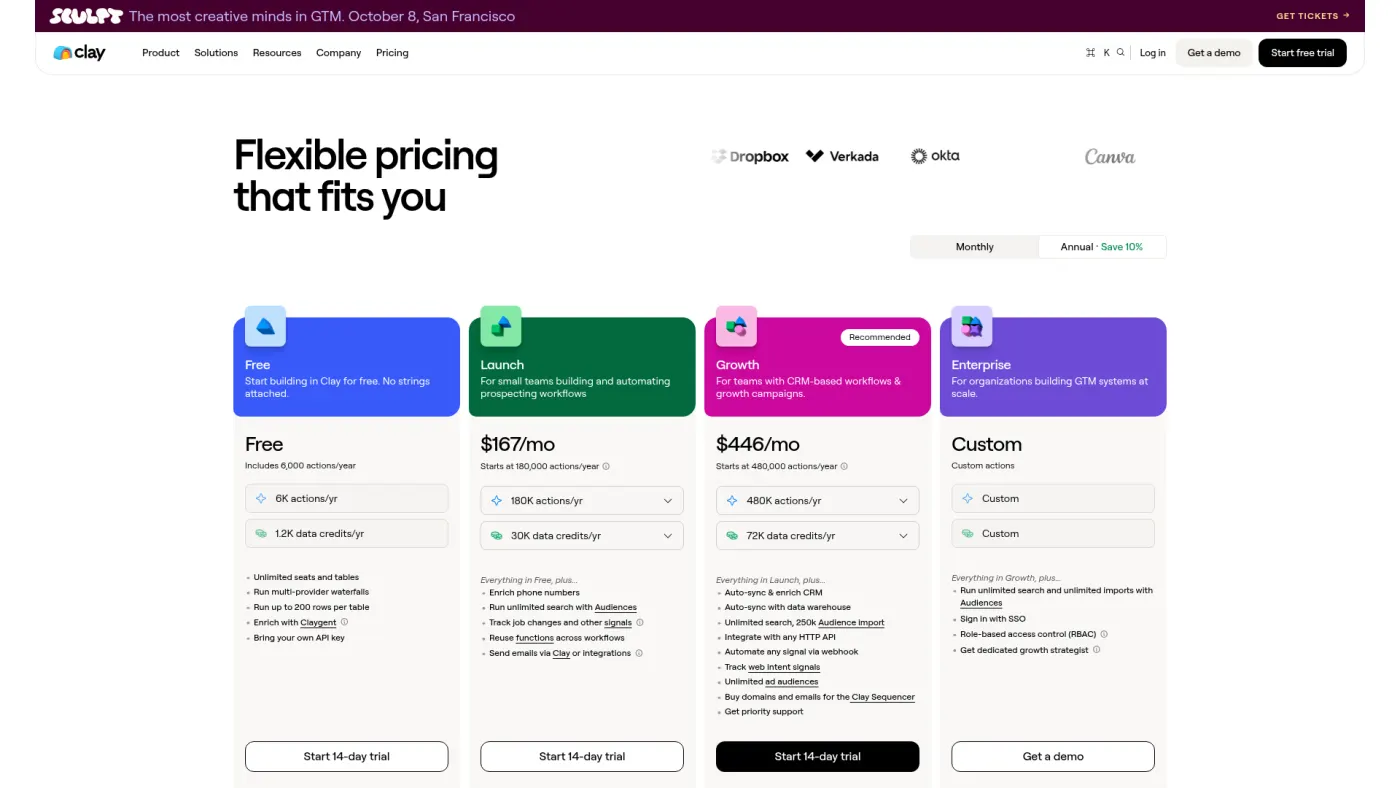
| Clay | Teams building multi-provider enrichment and routing logic | $185/month for Launch, or $167/month annual equivalent | The current model separates workflow actions from data credits; provider calls, enrichment logic, and top-ups can change total cost. | Clay can turn an undefined research process into an expensive, hard-to-debug table unless fields, fallbacks, and stop conditions are designed first. |
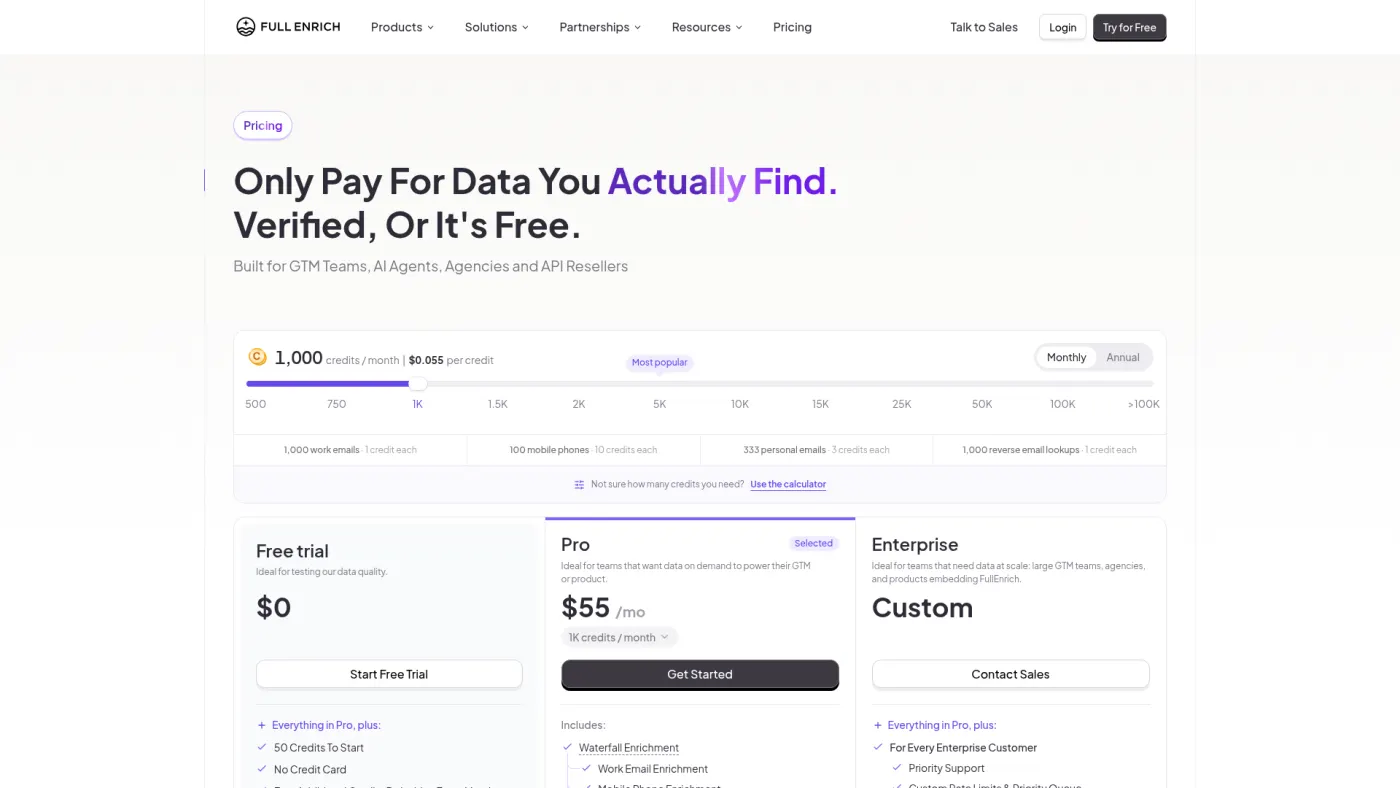
| FullEnrich | Waterfall email and mobile coverage without building the waterfall | $55/month for 1,000 credits | The checked page charged one credit for a work email, three for a personal email, and ten for a mobile number; a free 50-credit test was shown. | A waterfall can improve coverage but can also obscure which underlying source produced a field unless provenance and confidence remain visible. |
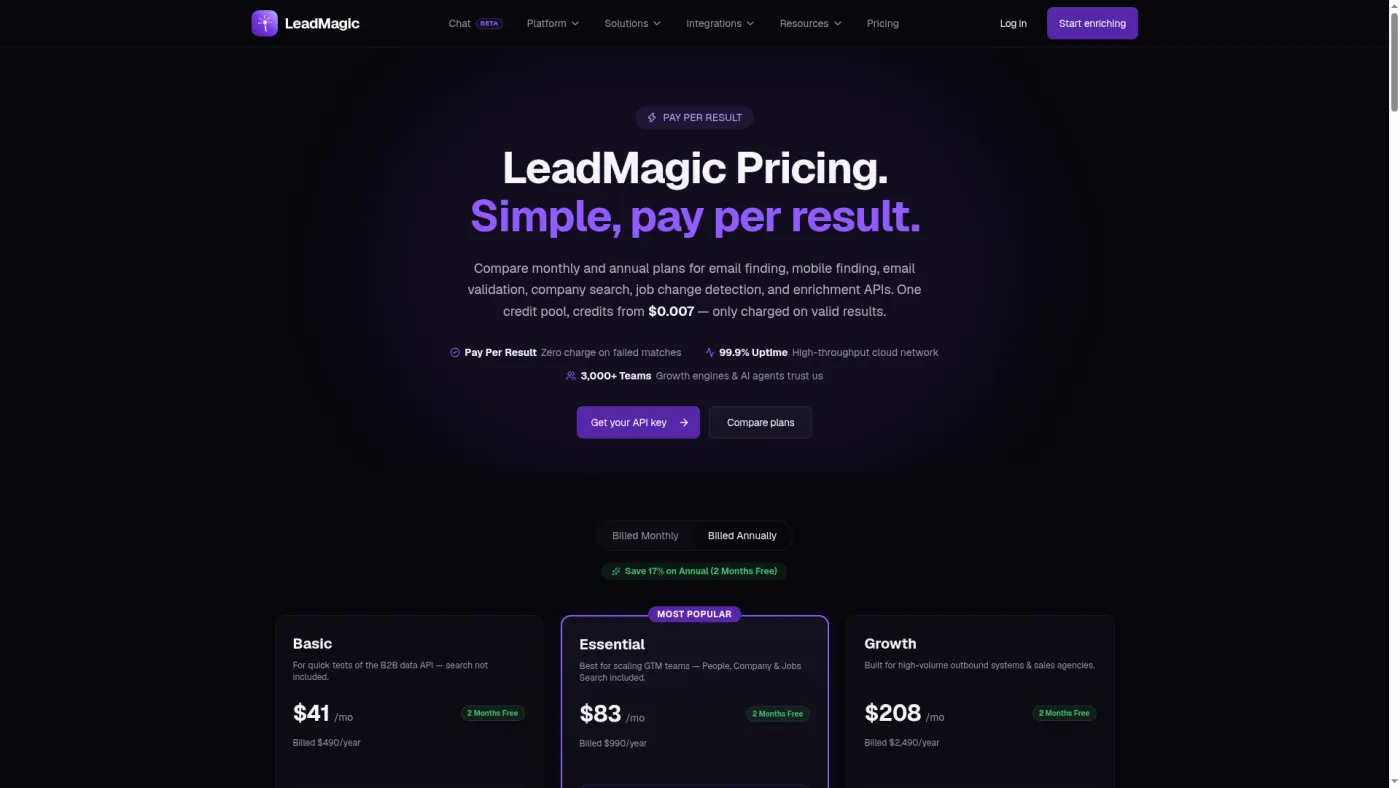
| LeadMagic | Technical teams that want granular pay-for-result data operations | $49.99/month for Basic, or about $41/month annual equivalent | The page showed different units for email finding, validation, and mobile results; search behavior and included capabilities change above Basic. | Granular endpoints and credit types require clear workflow accounting, and zero-cost searches on higher plans can distract from paid result economics. |
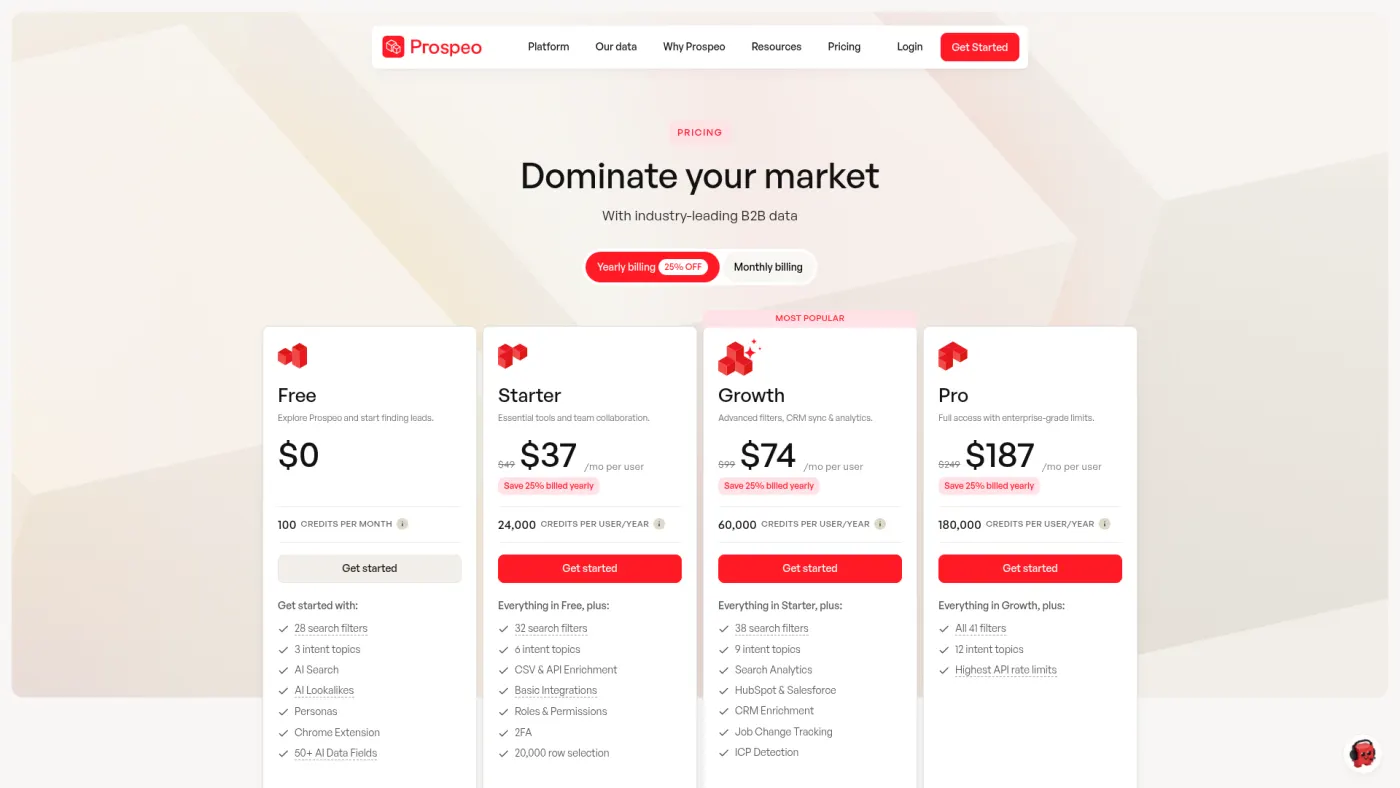
| Prospeo | Straightforward email finding, verification, and optional phone data | $49/user/month for Starter, or $37/user/month annual equivalent | The annual plan showed 24,000 credits without rollover; email and phone results consume materially different amounts. | Annual credits that do not roll over can punish uneven campaign schedules, and phone enrichment changes the effective cost quickly. |
| Findymail | Email-first enrichment with a simple finder and verifier allowance | $99/month for 5,000 finder credits plus 5,000 verifier credits | The checked page priced email and phone actions differently and allowed unused credits to roll over only up to a stated multiple. | It is a narrower contact-data layer than Clay, and a clean credit model still does not guarantee coverage in every niche or geography. |
Evidence method
How this shortlist was built
Reviewed September 10, 2026. Public vendor claims remain claims until they survive a controlled test on your domains, providers and messages.
- 1
Checked official pricing for the smallest credible paid entry and documented how email, phone, validation, workflow actions, and rollovers consume different units.
- 2
Captured one authentic public 1920×1080 vendor page per option, visually inspected it, and stored an uncropped optimized 1400×788 copy.
- 3
Separated orchestration, waterfall coverage, and specialist finding because they can be complementary layers rather than direct substitutes.
- 4
Declined to repeat vendor accuracy percentages as comparative facts without a controlled, shared sample and explicit denominator.
The shortlist
The five best lead enrichment tools
Clay
Best for: Teams building multi-provider enrichment and routing logic
Clay is the orchestration choice, not simply another database. It earns the premium when a technical owner needs to chain sources, transform fields, score records, and route only qualified rows. A simple email lookup rarely needs this much surface area.
- Public price
- $185/month for Launch, or $167/month annual equivalent
- Constraint
- The current model separates workflow actions from data credits; provider calls, enrichment logic, and top-ups can change total cost.
Drawback: Clay can turn an undefined research process into an expensive, hard-to-debug table unless fields, fallbacks, and stop conditions are designed first.
FullEnrich
Best for: Waterfall email and mobile coverage without building the waterfall
FullEnrich is the focused choice when the buyer wants a prebuilt waterfall rather than a general workflow canvas. Its unit math is readable, which makes it easier to test a representative sample and calculate cost per usable result.
- Public price
- $55/month for 1,000 credits
- Constraint
- The checked page charged one credit for a work email, three for a personal email, and ten for a mobile number; a free 50-credit test was shown.
Drawback: A waterfall can improve coverage but can also obscure which underlying source produced a field unless provenance and confidence remain visible.
LeadMagic
Best for: Technical teams that want granular pay-for-result data operations
LeadMagic fits a technical data layer where each result type can be called and costed deliberately. It is attractive when the team wants APIs and visible units, but the buyer should model finder, validator, and mobile steps separately.
- Public price
- $49.99/month for Basic, or about $41/month annual equivalent
- Constraint
- The page showed different units for email finding, validation, and mobile results; search behavior and included capabilities change above Basic.
Drawback: Granular endpoints and credit types require clear workflow accounting, and zero-cost searches on higher plans can distract from paid result economics.
Prospeo
Best for: Straightforward email finding, verification, and optional phone data
Prospeo is the straightforward specialist in this group. It works when the main job is finding and verifying contact data without building a full orchestration layer. Match the commitment to actual campaign cadence so unused annual credits do not become the hidden price.
- Public price
- $49/user/month for Starter, or $37/user/month annual equivalent
- Constraint
- The annual plan showed 24,000 credits without rollover; email and phone results consume materially different amounts.
Drawback: Annual credits that do not roll over can punish uneven campaign schedules, and phone enrichment changes the effective cost quickly.
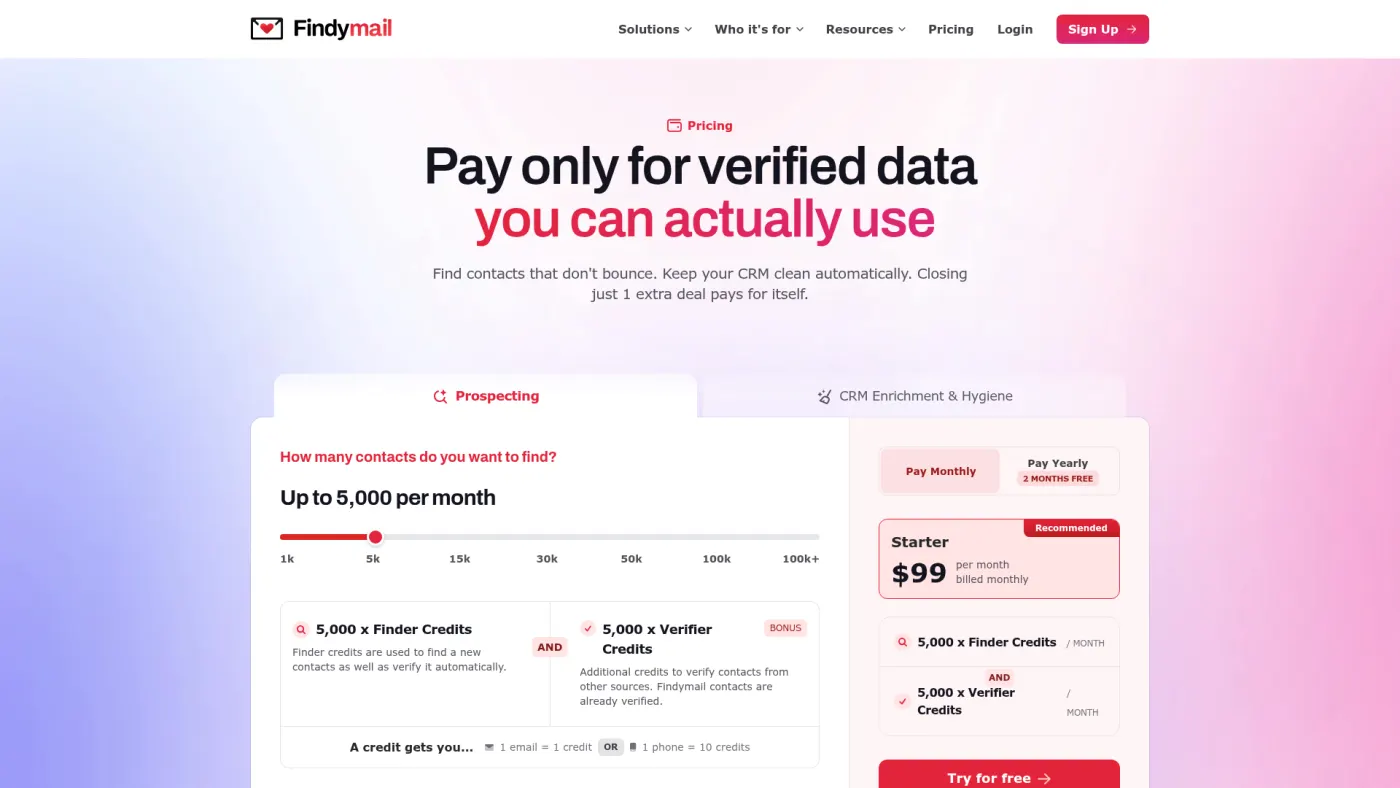
Findymail
Best for: Email-first enrichment with a simple finder and verifier allowance
Findymail is the clean email-first choice when the team wants distinct finding and verification allowances without a programmable workbench. Its rollover policy can suit uneven list-building months, but buyers should test their own target geography and titles.
- Public price
- $99/month for 5,000 finder credits plus 5,000 verifier credits
- Constraint
- The checked page priced email and phone actions differently and allowed unused credits to roll over only up to a stated multiple.
Drawback: It is a narrower contact-data layer than Clay, and a clean credit model still does not guarantee coverage in every niche or geography.
Original decision aid
Choose by the enrichment job, not the provider count
| Situation | Start with | Why |
|---|---|---|
| The team needs a programmable enrichment and routing table | Clay | Pay for the workbench only when someone owns provider order, transformations, QA, and activation rules. |
| Coverage should improve without building provider logic | FullEnrich | A packaged waterfall is easier to test, provided result provenance remains reviewable. |
| APIs and granular result economics matter | LeadMagic | Model every finder, validation, and phone call as a separate unit before scaling. |
| The job is mostly finding and verifying contacts | Prospeo | A specialist can be easier to own than an orchestration platform when the workflow is narrow. |
| Email-first credits need to survive uneven months | Findymail | Its separate finder and verifier pools plus bounded rollover can fit campaign-based list production. |
Historical operator evidence
Coverage varies; design the fallback before activation
In a January 2022 workflow video, Jan said email match rate depended on niche, country, and provider, and recommended testing alternatives rather than expecting every record to resolve. In a July 2023 Sales Navigator walkthrough, he showed the same practical reality: some records returned an email and others did not, so unresolved leads needed a separate path. Those historical examples are not a current vendor benchmark. They support a durable design rule: preserve missing-data states and test your own sample.
Watch the timestamped sourceQuality gate
Do not buy more enrichment when…
- — The team has not defined which new field changes qualification, routing, personalization, or rep action.
- — Missing results will be silently treated as negative data instead of a distinct state.
- — Source provenance, validation status, confidence, and last-checked date will be discarded on export.
- — The budget model counts records shown rather than usable outcomes returned.
- — There is no suppression, privacy, retention, and legal review for the intended data and market.
Final verdict
Use Clay when enrichment is a programmable workflow, FullEnrich when a packaged waterfall is the product, LeadMagic for granular technical endpoints, Prospeo for a straightforward finder-verifier layer, or Findymail for email-first credits with bounded rollover. The winning provider is the one that returns enough usable data on your own sample while preserving provenance and failure states.
Keep exploring
Related features guides
Sales tools with WhatsApp workflows
WhatsApp rarely sits alone. Compare tools that can support WhatsApp through multichannel sequencing, APIs, or workflow bridges—and verify the exact connection before buying.
Open guideOutbound tools with automation
Tools for sequencing, routing, enrichment, triggers, and repeatable outbound operations without pretending every automated action is equally safe.
Open guideOutbound tools with reporting
Compare campaign reporting, reply visibility, analytics, attribution context, and the operational work required to explain performance.
Open guideOutbound tools with AI
Compare AI for research, writing, enrichment, scoring, and workflow assistance. The useful question is what the model can do with your data and controls.
Open guide